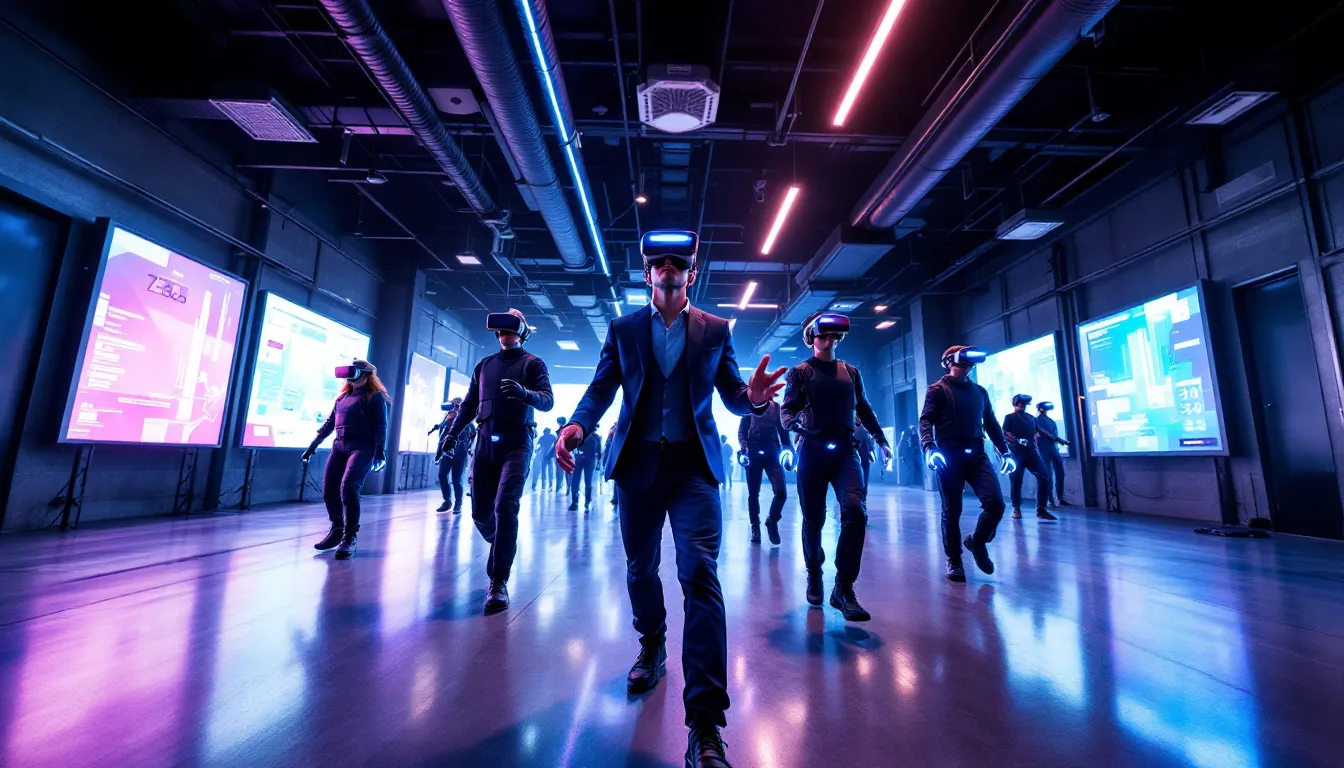
Houston’s VR gaming scene has exploded over the past two years, transforming from a handful of experimental arcades into a thriving ecosystem of free-roam arenas, competitive esports venues, and cutting-edge entertainment centers. Whether you’re a hardcore gamer looking to dominate in Pavlov VR tournaments or a casual player curious about stepping into virtual worlds for the first time, Houston’s got the hardware, the venues, and the community to make it happen.
This guide breaks down everything you need to know about VR gaming in Houston, from the best arcades and latest game titles to building your own home rig and finding local events. If you’re ready to strap on a headset and experience gaming in full immersion, here’s where to start.
Key Takeaways
- Houston’s VR gaming scene has transformed from niche arcades into a thriving ecosystem of premium free-roam venues, competitive esports leagues, and budget-friendly arcades, making it a top destination for both casual and hardcore VR gamers.
- Top venues like Sandbox VR, Zero Latency, and Arena VR Houston offer diverse experiences ranging from $25/hour pay-as-you-go options to premium $65-75 cinematic experiences with haptic suits and environmental effects.
- Popular VR games dominating Houston arcades include competitive shooters (Pavlov VR, Contractors), cooperative experiences (After the Fall), and accessible titles (Beat Saber, Moss) that cater to all skill levels and age groups.
- Building a home VR setup in Houston is accessible with the Meta Quest 3 ($300-$500) providing excellent value, while local retailers like Micro Center and the Houston VR Gamers Discord community offer support and hardware options.
- VR esports opportunities are rapidly professionalizing, with the Houston VR League, Arena VR Houston tournaments, and university competitions offering structured leagues, prize pools, and clear pathways for competitive players.
- First-time VR gamers should expect 5-10 minutes of brain adjustment, choose motion-sickness-friendly games initially (Beat Saber, teleport-based experiences), and recognize that VR is more physically demanding than traditional gaming.
Why Houston Has Become a VR Gaming Hotspot
Houston wasn’t an obvious pick for VR dominance a few years back, but the city’s combination of tech investment, sprawling real estate, and a massive gaming community has created the perfect storm.
First, the sheer size of Houston works in VR’s favor. Free-roam VR experiences need physical space, thousands of square feet for players to move around without bumping into walls. Houston’s commercial real estate market offers affordable warehouse conversions that coastal cities can’t match. Several VR arcades have capitalized on this, building multi-room arenas that rival anything in LA or NYC.
Second, Houston’s gaming culture is diverse and hungry for innovation. The city hosts regular esports events, LAN parties, and gaming conventions that draw thousands of attendees. VR fits naturally into this ecosystem, offering something traditional console and PC gaming can’t: full-body immersion and physical movement. Venues report that players who try VR once typically return within two weeks, often bringing friends.
Third, the tech infrastructure is solid. Houston’s proximity to major distribution hubs means VR arcades get hardware faster and cheaper than remote markets. Local universities like Rice and UH have also started VR development programs, feeding talent into both the arcade industry and indie game studios. The result is a self-sustaining loop of innovation, investment, and player engagement that’s only accelerating in 2026.
Top VR Gaming Arcades and Centers in Houston
Houston’s VR scene spans everything from high-end free-roam experiences to budget-friendly pay-per-hour stations. Here’s the breakdown of what’s available and where to find it.
Premium Free-Roam VR Experiences
Sandbox VR (multiple Houston locations including Galleria and Katy) remains the gold standard for free-roam multiplayer. Their proprietary motion-capture suits track full-body movement with near-zero latency, and the experience library includes Deadwood Mansion (a zombie shooter that actually gets your heart racing) and Star Trek: Discovery Away Mission. Sessions run 30-40 minutes and cost $48-$58 per person depending on time of day. Worth every dollar if you want the most advanced commercially available VR tech.
Zero Latency VR (Energy Corridor location opened January 2025) offers warehouse-scale play areas, up to 2,000 square feet of free-roam space. Their Zombie Survival and Sol Raiders (a sci-fi shooter) support up to eight players simultaneously. The gear is slightly bulkier than Sandbox’s, but the raw space makes up for it. Pricing sits around $55 per session, with group discounts kicking in at six players.
CTRL V (Memorial City location) splits the difference between premium and accessible. They run both free-roam experiences and traditional tethered VR stations. The free-roam arena handles four players max, but they’ve got exclusive content including a Jumanji tie-in experience that’s surprisingly well-executed. Sessions start at $42 per person.
Budget-Friendly VR Arcade Options
GameWorks Houston (in Webster) added a VR zone in late 2024 featuring Meta Quest 3 stations and some PSVR2 setups. It’s a pay-per-game model, typically $5-$8 per experience, making it ideal for trying VR without committing to a full session. The game library rotates but usually includes Beat Saber, Superhot VR, and Moss.
Main Event Entertainment (multiple locations) has integrated VR into their broader arcade offerings. Their VR pods run HTC Vive Pro 2 headsets with a curated selection of family-friendly and action titles. Pricing is bundled into their game card system, usually working out to about $7-$10 per 10-minute session. Not the deepest library, but convenient if you’re already there for bowling or laser tag.
VR World Houston (northwest Houston, opened March 2025) operates as a pure pay-per-hour venue. $25 gets you 60 minutes on a Valve Index or Quest Pro with access to their Steam library of 200+ titles. You pick your games, they handle the setup. It’s the closest thing to a VR gaming café, perfect for experienced players who know what they want to play.
VR Escape Rooms and Multiplayer Arenas
Escape VR (Midtown location) specializes in puzzle-based VR escape rooms. Teams of 2-6 players work through scenarios like Escape the Lost Pyramid and Mission Sigma. The puzzles actually require communication and coordination, button-mashing won’t save you here. Sessions run 60-90 minutes at $38-$45 per person. Book ahead: they fill up on weekends.
Dreamscape Immersive (The Galleria, opened summer 2025) pushes VR into cinematic territory. Their experiences blend Hollywood production values with interactive gameplay. The Blu: Deep Rescue and Alien Zoo feature custom haptic vests and environmental effects (wind, heat, scent). It’s more themed entertainment than pure gaming, but the tech is jaw-dropping. Pricing runs steep at $65-$75 per experience, but the production quality justifies it for special occasions.
Arena VR Houston (Pearland) focuses exclusively on competitive multiplayer. Their primary offering is Solaris Offworld Combat, a team-based shooter where two squads of five battle across sci-fi maps. It’s the closest VR gets to traditional esports structure, they even run ranked seasons with leaderboards. Drop-in sessions cost $35 per person: league play requires seasonal registration.
Best VR Games Available at Houston Locations
Not all VR games are created equal, and Houston venues have learned which titles keep players coming back. Here’s what’s actually worth your time and money.
Action and Shooter Titles
Pavlov VR dominates the competitive shooter landscape at multi-station venues like VR World Houston and CTRL V. The gameplay loop mirrors Counter-Strike, tactical gunplay, economy management, objective-based modes, but the physicality of reloading weapons and peeking around corners adds layers traditional FPS can’t match. Most Houston arcades run custom servers with map rotations tuned for pickup games.
Contractors VR offers a more Call of Duty-style experience with faster movement and run-and-gun mechanics. Arena VR Houston uses it for their casual shooter nights, and the modding community keeps content fresh. The weapon handling feels slightly more forgiving than Pavlov, making it better for players transitioning from console shooters.
After the Fall (available at Zero Latency and Sandbox VR) delivers co-op zombie shooting with RPG progression. Four players fight through 1980s Los Angeles overrun by undead, collecting weapons and upgrades between waves. The gameplay loop is addictive enough that Houston venues report high replay rates, players grinding for better gear and higher difficulty tiers.
Pistol Whip shows up at almost every Houston VR location because it’s the perfect 10-minute experience. Rhythm-based shooting that makes you feel like you’re in a John Wick movie. Easy to learn, brutally hard to master. The physicality wears you out faster than you’d expect.
Horror and Thriller Experiences
Many consumers comparing gaming monitor reviews for traditional setups don’t realize how differently horror plays in VR, the immersion multiplies the fear factor exponentially.
The Exorcist: Legion VR (available at Escape VR and select CTRL V stations) remains the benchmark for VR horror. Five chapters of escalating dread, each about 20-30 minutes. The jump scares are effective, but the atmospheric tension is what sticks with you. Not recommended as a first VR experience, several Houston venues require players to sign extra waivers for this one.
Phasmophobia works surprisingly well in VR arcade settings when run with voice chat. Sandbox VR and Zero Latency occasionally host ghost-hunting events where teams investigate haunted locations using EMF readers and spirit boxes. The social deduction element (figuring out ghost types based on evidence) gives it replay value beyond the scares.
Lies Beneath delivers comic-book-styled horror with surprisingly effective monster encounters. It’s single-player, making it a good fit for solo arcade sessions at VR World Houston. The cel-shaded art style helps with motion sickness while maintaining creepy atmosphere.
Family-Friendly VR Games
Beat Saber is the universal VR gateway drug. Every Houston venue has it, and for good reason, it’s immediately intuitive, physically engaging, and satisfying regardless of skill level. The modding community keeps adding songs, though arcade versions typically run official DLC packs to avoid licensing issues.
Moss and Moss: Book II show up at family-oriented venues like Main Event and GameWorks. The third-person perspective (you guide a tiny mouse hero through puzzle-platformer levels) eliminates motion sickness concerns while delivering genuinely charming storytelling. Kids love it, adults appreciate the polish.
Angry Birds VR: Isle of Pigs works exactly like you’d expect, physics-based destruction puzzles from a first-person perspective. It’s available at most budget-friendly Houston arcades and works great for younger players (8+) getting their first VR experience.
Walkabout Mini Golf has become a sleeper hit at Houston VR cafés. Relaxing, social, and zero motion sickness risk. VR World Houston runs regular mini-golf leagues, which sounds absurd but draws consistent crowds.
Building Your Home VR Gaming Setup in Houston
Houston’s arcade scene is thriving, but serious VR gamers eventually want their own hardware. Here’s how to build a home setup that delivers without wasting money on overhyped gear.
Recommended VR Headsets and Hardware
As of March 2026, the VR headset landscape has stabilized around three tiers:
Budget Entry ($300-$500): Meta Quest 3 remains unbeatable for price-to-performance. The standalone capability means no PC required for hundreds of native games, but it also functions as a PCVR headset when tethered or using Air Link wireless. Resolution sits at 2064×2208 per eye with a 120Hz refresh rate, solid specs for the price. Houston’s muggy climate means you’ll want to invest in silicone face covers and a fan attachment: the stock foam gets gross fast.
Mid-Tier ($800-$1,200): PlayStation VR2 (for PS5 owners) or Valve Index (for PC gamers). PSVR2 delivers excellent value if you’re already in Sony’s ecosystem, Resident Evil Village VR and Gran Turismo 7 in VR justify the headset alone. The Valve Index is aging hardware (launched 2019) but the controller tracking and audio quality still compete with 2026 releases. Index controllers remain the gold standard for finger tracking in VR.
Premium ($1,500+): Varjo Aero or Pimax Crystal. These are enthusiast-tier headsets for sim racers and flight sim addicts who demand maximum visual fidelity. The Varjo Aero’s clarity is unmatched, but you’ll need a beast of a PC to drive it. Most Houston gamers don’t need this level of hardware unless they’re running professional sim rigs.
For PC specs, VR demands more GPU horsepower than traditional gaming. An RTX 4070 or RX 7800 XT handles most VR titles at high settings. Skimping on GPU to save $200 guarantees a bad experience, reprojection artifacts and stuttering kill immersion faster than low-res textures.
Play space matters more than people expect. You need a minimum 6.5×6.5 feet for room-scale VR: 10×10 feet is comfortable. Houston apartments with 9-foot ceilings handle most games fine, but you’ll occasionally punch the ceiling in Gorilla Tag.
Where to Buy VR Equipment in Houston
Micro Center (off I-45 North) stocks VR headsets, replacement parts, and PC components. Their staff actually game, so you’ll get real recommendations instead of reading spec sheets at you. They price-match online retailers and occasionally run bundle deals (headset + game codes + accessories) that beat buying separately.
Best Buy (multiple locations) carries Meta Quest headsets and PSVR2 with decent availability. Selection is limited compared to Micro Center, but their return policy is more forgiving if you discover VR makes you nauseous. Try before committing to a full setup.
GameStop (various locations) has expanded VR stock over the past year. They run trade-in programs for older headsets, you can trade a Quest 2 toward a Quest 3 and knock $150-$200 off the upgrade. Selection varies by location: call ahead.
For used gear, Houston VR Marketplace (Facebook group with 8,000+ members) facilitates local sales. Exercise normal used-electronics caution, but you can find solid deals on barely-used hardware from people who discovered VR wasn’t for them. Always test before buying.
Online retailers like Amazon and Newegg obviously work, but buying VR locally lets you test fit before committing. Headsets that work for most faces might not work for yours, IPD (interpupillary distance) adjustment range matters, and you won’t know if it’s comfortable until you try it.
Local Tech Support and VR Communities
Houston VR Gamers (Discord server, 3,500+ members) is the city’s primary community hub. They organize meetups, share game recommendations, troubleshoot technical issues, and coordinate multiplayer sessions. The #tech-support channel has solved countless setup headaches, post your issue and you’ll usually get solutions within an hour.
VRChat Houston (subset of the main Discord) hosts weekly meetups in VRChat worlds designed by local creators. It’s part social club, part creative showcase. Even if you’re not into VRChat’s metaverse aspects, the community organizes real-world meetups at arcades and bars.
Micro Center’s VR Clinic (first Saturday of each month) offers free troubleshooting and setup assistance. Bring your headset, they’ll diagnose tracking issues, help optimize settings, or recommend hardware upgrades. It’s technically a sales funnel, but the advice is genuine.
For repairs, Tech Lab Houston (Westheimer location) handles VR headset repairs including lens replacements, strap repairs, and controller fixes. Meta doesn’t make Quest 2 controllers anymore, so repair is often cheaper than buying third-party replacements.
VR Gaming Events and Tournaments in Houston
Houston’s VR competitive scene has matured significantly in the past 18 months, evolving from casual meetups to structured leagues with prize pools.
Regular Meetups and Gaming Nights
VR Tuesdays at Arena VR Houston (every Tuesday, 7-10 PM) runs drop-in multiplayer sessions across rotating games. Recent rotations included Pavlov VR, Population: One, and Walkabout Mini Golf. $20 entry gets you three hours of play and access to private Discord channels for coordinating teams. The crowd skews competitive but welcoming, expect callouts and strategy discussion, not toxic behavior.
Sandbox VR Social Night (first Friday monthly at Galleria location) offers discounted group rates ($38 instead of $52) for their premium experiences. It’s become a regular gathering spot for the Houston VR Gamers Discord community. Arrive early: they cap attendance at 50 people and routinely sell out.
Zero Latency’s Free-Roam Fridays (bi-weekly) focuses on their Sol Raiders game mode with extended 90-minute sessions instead of the standard 60. Teams compete for leaderboard rankings, with top performers earning free return sessions. The competition gets serious, communication and tactical coordination separate winning teams from everyone else.
CTRL V Fight Nights (third Saturday monthly) specializes in VR fighting games like Thrill of the Fight and Creed: Rise to Glory. Single-elimination brackets, weight-class-style skill divisions, and championship belts for winners. It’s exactly as ridiculous and entertaining as it sounds. $25 entry, winner takes half the pot.
When researching hardware for competitive play, detailed headset comparisons can help identify which models minimize latency and maximize refresh rates for tournament-level performance.
Competitive VR Esports Opportunities
Houston VR League (launched September 2025) operates seasonal competitions across multiple games. Spring 2026 season features Pavlov VR (5v5 tactical shooter), Echo VR (zero-gravity disc sport), and Blade & Sorcery: Nomad (dueling tournament). Registration costs $50 per season, with prize pools reaching $2,000+ depending on division enrollment. Matches happen at Arena VR Houston and CTRL V, with some teams practicing at home.
The league structure mirrors traditional esports: regular season matches, playoffs, and championship finals. Top performers from Houston qualify for regional VR esports events in Dallas and Austin. It’s not professional-level prize money, but the competitive structure is legitimate.
VR Master League (national organization with Houston chapter) runs Onward VR competitions focused on tactical military simulation gameplay. The Houston team competes in online leagues against chapters nationwide. Practice sessions happen at VR World Houston (Wednesdays, 8-11 PM). Membership requires tryouts, they take it seriously.
University VR Leagues are emerging at Rice, UH, and Texas Southern. Rice’s VR esports club competes in Contractors VR tournaments against other universities. UH focuses on Population: One (battle royale). Collegiate VR esports are still finding their footing, but scholarships and sponsored teams are beginning to appear.
VR Fight League (Houston chapter established January 2026) focuses exclusively on Thrill of the Fight competitive boxing. Monthly tournaments with skill-based brackets and amateur rankings. Several Houston fighters have qualified for national VR boxing championships in Las Vegas. Training sessions at CTRL V on Tuesdays and Thursdays.
Hosting VR Gaming Parties and Corporate Events
VR’s novelty factor and physical engagement make it ideal for events where traditional entertainment falls flat. Houston venues have built comprehensive packages around this.
Birthday Parties and Private Bookings
Sandbox VR offers the most polished private party experience. Their birthday packages ($400-$800 depending on guest count) include reserved time slots, party host coordination, and access to their full experience library. They handle 8-30 guests efficiently by rotating groups through different experiences. Parents consistently praise the minimal-effort aspect, show up, Sandbox handles everything, kids leave exhausted and happy.
Zero Latency birthday packages ($500-$1,200) focus on larger groups due to their warehouse-scale play areas. Up to 48 guests in three-hour windows with staggered session starts. They provide party rooms for cake/food between VR sessions. The age minimum is 10 years old (8 with parent participation), and they enforce it, the equipment doesn’t fit smaller kids properly.
Main Event bundles VR into broader party packages including arcade credits, laser tag, and food. Their pricing ($25-$35 per kid) makes them the budget option, though VR time is limited (usually 15-20 minutes per guest). Works well for younger kids (7-12) who need activity variety to stay engaged.
VR World Houston handles private bookings differently, rent the entire venue ($800 for three hours, accommodates 20-30 people) and guests choose their own games from the Steam library. Better for teenager/young adult parties where people want autonomy instead of guided experiences. BYOB-friendly for 21+ events.
Arena VR Houston specializes in competitive party formats, team tournaments with brackets and prize competitions. Their Solaris Combat tournament package ($600-$900) runs elimination brackets with medals for top performers. Works exceptionally well for teen birthdays where competitiveness is a feature, not a bug.
Team Building and Corporate Packages
Corporate VR events have exploded in Houston over the past year as companies discover that VR actually forces communication and collaboration in ways trust falls never did.
Sandbox VR’s corporate packages ($1,200-$3,500 depending on headcount and duration) include experiences specifically designed for team building. Deadwood Mansion requires constant communication to survive, naturally surfacing team dynamics and communication patterns. Several Houston companies now run quarterly VR sessions as part of leadership development programs.
Escape VR builds custom corporate events ($1,500-$4,000) around their puzzle-focused experiences. Teams must coordinate and delegate tasks to solve escape rooms under time pressure. They provide facilitators who can observe team interactions and deliver debriefs connecting VR performance to workplace dynamics. It’s corporate training dressed up as entertainment, but participants actually enjoy it.
Zero Latency handles large corporate events (50-200 people) by running tournament-style competitions with leaderboards and prizes. Their event coordinators manage logistics, timing, and scoring. Companies typically book 4-6 hour blocks with catering ($3,000-$8,000+ depending on headcount). The competitive angle works well for sales teams and departments with existing rivalries.
CTRL V offers hybrid packages combining VR experiences with traditional meeting space. Book their private room ($150-$300 depending on duration) for presentations/meetings, then move groups into VR sessions for team activities. The flexibility appeals to companies wanting structured agendas with experiential components.
All major Houston VR venues offer alcohol service for corporate events (21+ only), and several have catering partnerships with local restaurants. Book 3-4 weeks ahead for corporate events: weekday afternoon slots fill fast during Q4 and early Q1 when companies burn remaining budget.
Tips for First-Time VR Gamers in Houston
VR looks simple in YouTube videos, but the reality is more complicated. Here’s what first-timers need to know to avoid common pitfalls and actually enjoy the experience.
What to Expect During Your First Session
Your brain will need 5-10 minutes to adjust to VR. Everything feels slightly off initially, depth perception is different, hand-eye coordination needs recalibration, and movement feels disconnected from your body. This is normal. Don’t judge VR based on the first three minutes: give your brain time to adapt.
Most Houston venues start first-timers with tutorial experiences or simple games like Beat Saber before moving to complex shooters or horror games. Trust this progression. Jumping straight into Pavlov VR or Phasmophobia guarantees frustration or nausea.
VR is more physically demanding than traditional gaming. Ten minutes of Pistol Whip will spike your heart rate: 30 minutes of Gorilla Tag burns serious calories. Wear comfortable, breathable clothing. Houston venues keep AC cold, but you’ll still work up a sweat.
Headset fit matters enormously. If the image looks blurry, stop and adjust, either the IPD (lens spacing) is wrong for your eyes, or the headset position needs tweaking. Houston arcade staff can help dial this in. Playing with poor clarity causes eye strain and headaches.
Take breaks. VR fatigue is real, and it hits different than screen fatigue. Most people max out around 45-60 minutes before needing a rest. Pushing through discomfort doesn’t build tolerance: it just associates VR with feeling bad.
Avoiding Motion Sickness and Maximizing Comfort
Motion sickness in VR (called “sim sickness”) happens when visual motion doesn’t match physical motion. Your eyes say you’re moving: your inner ear says you’re standing still. Brain gets confused, nausea follows.
The best prevention is choosing games wisely for your first few sessions. Stick with:
- Stationary experiences: Beat Saber, Pistol Whip, Superhot VR (time only moves when you move)
- Teleport movement games: Moss, many escape room experiences
- Third-person perspectives: Games where you control a character instead of being the character
Avoid for your first 2-3 VR sessions:
- Smooth locomotion games: Walking with thumbstick controls
- Vehicle simulations: Racing games, flight sims (unless you’re in an actual motion simulator)
- Fast rotation: Games requiring quick 360-degree spins
If you start feeling nauseous, stop immediately. Sit down, remove the headset, focus on a fixed point in the room. Nausea typically fades in 5-15 minutes. Pushing through makes it exponentially worse and can ruin VR for you long-term.
Other comfort tips:
- Keep a fan pointed at you: Airflow reduces nausea and helps with heat
- Stay hydrated: Dehydration amplifies motion sickness
- Don’t play on an empty stomach: But also don’t play immediately after a heavy meal
- Remove glasses if possible: Most modern headsets have diopter adjustment: ask venue staff
- Tie back long hair: Gets tangled in head straps otherwise
Houston VR veterans recommend taking ginger supplements 30 minutes before sessions if you’re prone to motion sickness. Sea-Bands (acupressure wristbands) also help some people. Both are available at most Houston pharmacies.
For glasses wearers, bring a microfiber cloth. Face shields and lenses fog up constantly in Houston humidity. Most venues provide anti-fog solutions, but having your own cloth helps.
The Future of VR Gaming in Houston
Houston’s VR trajectory points toward expansion and specialization rather than consolidation. Several trends are reshaping what’s available and who’s playing.
Location-based VR (LBE) venues are pivoting toward exclusive content. Sandbox VR’s 2026 roadmap includes Houston-exclusive experiences, games developed specifically for their platform that won’t appear on consumer headsets. This creates compelling reasons to visit arcades even for people with high-end home setups. Zero Latency is following similar strategies with IP partnerships rumored to include major film franchises.
VR esports infrastructure is professionalizing rapidly. Arena VR Houston plans to open a dedicated 10,000-square-foot competitive VR venue in late 2026 featuring spectator seating, streaming production capability, and practice facilities. They’re positioning Houston as a regional VR esports hub competing with Dallas and Austin. Prize pools are growing, the Houston VR League’s championship event in December 2025 awarded $8,500 total prizes, triple the 2024 amount.
Fitness-focused VR is gaining serious traction. Les Mills BodyCombat VR and Supernatural have proven VR fitness retention rates that rival traditional gyms. Two Houston fitness studios have added VR fitness classes to regular schedules, and at least one VR-exclusive fitness center is planned for the Heights neighborhood in mid-2026. The appeal is obvious: gamified workouts that don’t feel like punishment.
Mixed reality (MR) is bleeding into VR venues. Meta Quest 3’s passthrough capabilities and Apple Vision Pro’s upcoming consumer release are pushing venues to experiment with augmented reality experiences. CTRL V Houston is testing AR escape rooms that blend physical room elements with virtual overlays. Early results suggest MR bridges the gap for people hesitant about full VR immersion.
Social VR platforms like VRChat and Rec Room are spawning real-world Houston communities. Monthly meetups at bars and arcades bring virtual friendships into physical space. The Houston VRChat community has grown from 200 members in 2024 to over 1,000 in early 2026. These aren’t just gaming communities anymore, they’re social networks with VR as the connective tissue.
Hardware accessibility continues improving. Headset prices have dropped 30-40% over three years while specs improved dramatically. The Quest 3 at $499 delivers experiences that required $2,500 in hardware in 2020. This democratization means more Houston gamers can afford home VR, which paradoxically drives arcade attendance, people try VR at home, want premium experiences, visit arcades for free-roam and multiplayer.
Local VR development is emerging as a viable industry. Several Houston-based indie studios are building VR-first games, and local universities are producing VR developers at increasing rates. This creates a virtuous cycle: local talent builds experiences that showcase at Houston venues, attracting more interest and investment.
The biggest wildcard is whether major VR hardware manufacturers will establish Houston presence. Rumors suggest Meta is scouting Houston for a regional VR experience center similar to their Burlingame facility. If that happens, Houston’s position as a VR hub becomes self-reinforcing, talent concentrates, investment follows, infrastructure expands.
Conclusion
Houston’s VR gaming scene in 2026 offers something for everyone, from premium free-roam arenas and competitive esports leagues to budget-friendly arcades and home setup options backed by strong local communities. The city’s combination of physical space, gaming culture, and tech infrastructure has created an ecosystem where VR isn’t just surviving but genuinely thriving.
Whether you’re dropping into Sandbox VR for a birthday party, grinding ranked seasons at Arena VR Houston, building a Quest 3 setup for home, or exploring VRChat with local communities, Houston provides the venues, the games, and the people to make VR gaming work. The scene’s only getting bigger, the hardware’s only getting better, and 2026 is shaping up to be the year VR moves from novelty to necessity for Houston gamers.