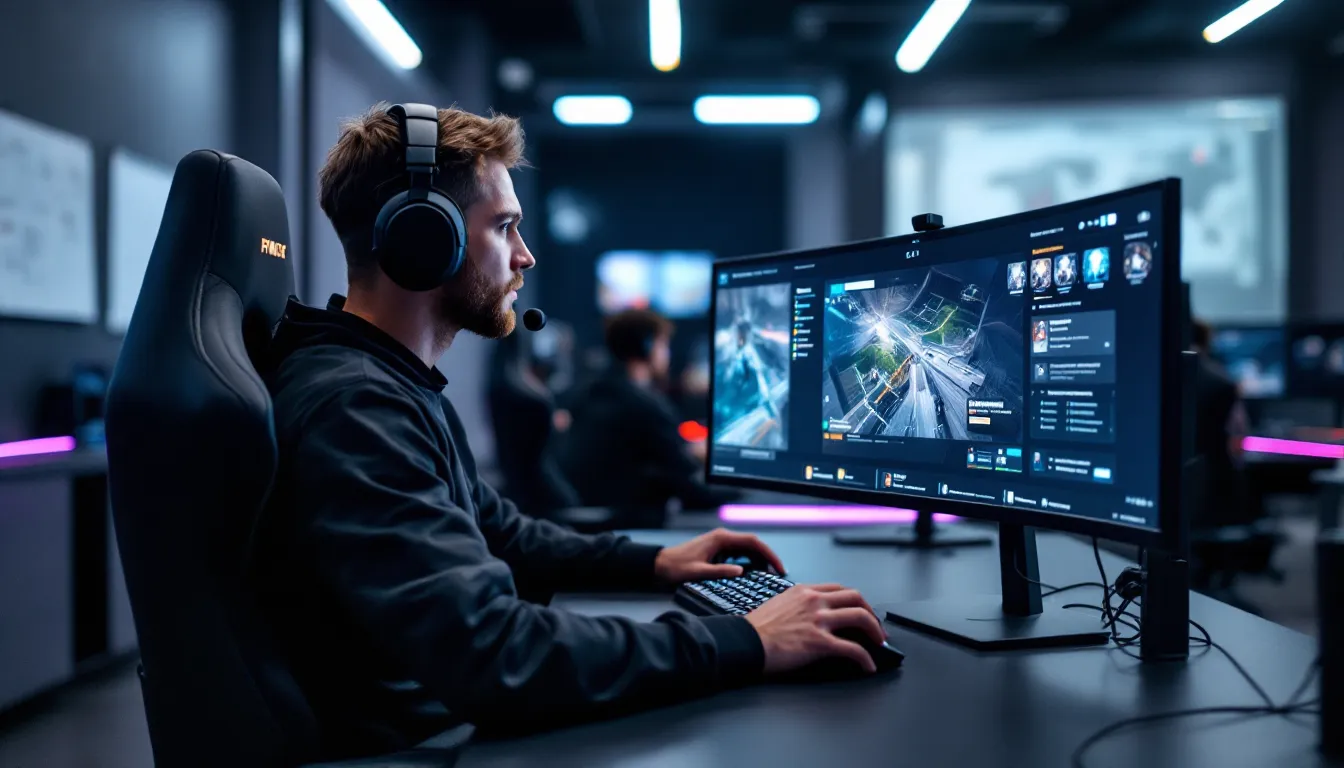
Tactical gaming isn’t just about twitch reflexes or raw mechanical skill, it’s a chess match played at 120fps. While run-and-gun shooters reward aggression and MOBAs demand quick decision-making, tactical games force players to think three moves ahead, coordinate every action with their team, and punish mistakes brutally. One bad call, one missed angle, one economy mismanagement, and the round’s over.
In 2026, tactical gaming has cemented itself as one of the most competitive and rewarding genres across PC and console platforms. Titles like Valorant, Rainbow Six Siege, XCOM 2, and Starcraft II continue to draw millions of players who crave depth, coordination, and that unmatched feeling of executing a perfectly planned strategy. Whether you’re new to the genre or looking to sharpen your edge, understanding what separates tactical gaming from other genres, and how to excel at it, can transform your play.
Key Takeaways
- Tactical gaming emphasizes strategic decision-making, information control, and team coordination over reflexes alone, requiring players to think multiple moves ahead and execute perfectly coordinated plans.
- Core pillars of tactical gaming include information control (vision and intel), map positioning, economy management, and role clarity—all critical whether you’re playing FPS titles like Valorant or turn-based strategy games like XCOM 2.
- Competitive tactical gaming infrastructure has exploded with multi-million dollar esports scenes, professional salaries, and career pathways from amateur leagues to sponsored teams across games like Counter-Strike 2, Valorant, and Rainbow Six Siege.
- Essential skills for tactical gaming success include map awareness and positioning, effective team communication with concise callouts, resource economy management, and the ability to read opponent patterns and adapt mid-match.
- Common mistakes that hold back tactical gaming players include over-peeking, ignoring economy systems, poor communication, predictable patterns, and solo plays that break team coordination—avoiding these accelerates improvement significantly.
- Building a competitive tactical gaming setup requires specific hardware (RTX 4060+ GPU, i5-13400+ CPU, 240Hz+ monitor), quality peripherals (precision gaming mouse, mechanical keyboard, open-back headset), and finding a consistent team to develop chemistry and coordination.
What Is Tactical Gaming?
Tactical gaming emphasizes deliberate decision-making, strategic planning, and coordinated execution over pure reflexes. Players win not by outgunning opponents with superior aim alone, but by outsmarting them through positioning, information control, resource allocation, and team synergy.
The genre spans multiple formats, FPS titles like Valorant and Counter-Strike 2, turn-based strategy games like XCOM 2 and Fire Emblem, and real-time tactics hybrids like Company of Heroes 3. Even though their differences in pacing and perspective, all share a common thread: every action carries weight, and mistakes cascade into losses.
Core Elements That Define Tactical Gameplay
Tactical games revolve around a handful of core pillars that separate them from reflex-driven or casual experiences.
Information control sits at the heart of tactical gameplay. Vision, sound cues, intel gathering, and denying the enemy knowledge of your position create the foundation for every successful play. In Siege, drone usage and camera placement dictate who controls the round. In Valorant, agent abilities like Sova’s Recon Bolt or Cypher’s Spycam give teams the eyes they need to make informed decisions.
Positioning and angles determine gunfights before a single shot is fired. Understanding crossfire setups, off-angles, and pre-aiming common peek spots can mean the difference between a clean trade and getting wiped. Map control isn’t just about territory, it’s about forcing enemies into disadvantageous engagements.
Economy management appears across tactical shooters and strategy games alike. In CS2, managing your team’s economy, when to save, force-buy, or full-buy, can swing entire matches. In XCOM 2, resource allocation between research, engineering, and soldier upgrades dictates your campaign’s success or failure.
Team coordination and role clarity ensure every player contributes to the win condition. Entry fraggers create space, support players hold flanks, IGLs (in-game leaders) call rotations and strategies. Solo plays can clutch rounds, but consistent wins demand synchronized teamwork.
How Tactical Gaming Differs From Other Genres
The line between tactical games and other competitive genres can blur, but the differences run deep.
Unlike battle royales, where RNG loot and zone rotations introduce variance, tactical games emphasize consistency and mastery of controlled environments. Every Valorant round starts with the same economy rules and map layout. Success stems from preparation and execution, not lucky circle placement.
Compared to arena shooters like Quake or Unreal Tournament, tactical games slow the pace and amplify consequences. You can’t respawn instantly or out-heal damage with armor pickups. One headshot can end your round, forcing cautious, calculated movement rather than constant aggression.
MOBAs share strategic depth with tactical games, but the timeframes differ. A League of Legends match builds power curves over 30+ minutes, while tactical shooters compress strategic decisions into 90-second rounds. The intensity and reset pace demand different mental stamina.
Tactical games also differ from traditional turn-based RPGs in stakes and competitive focus. While both require planning, tactical games integrate PvP competition, forcing adaptation to human opponents who learn, bait, and counter your strategies in real-time.
The Evolution of Tactical Gaming
Tactical gaming didn’t emerge overnight. Its roots trace back decades, evolving through technological advances, community-driven innovation, and the professionalization of esports.
From Classic PC Titles to Modern Cross-Platform Experiences
The genre’s foundation was laid in the late ’90s and early 2000s with landmark PC titles. Rainbow Six (1998) pioneered tactical FPS gameplay with its planning phase and permadeath mechanics. Counter-Strike (1999) refined the formula, introducing economy systems and round-based competition that still define the genre today.
Turn-based tactics flourished simultaneously. X-COM: UFO Defense (1994) established grid-based combat with permanent consequences, while Jagged Alliance and Final Fantasy Tactics brought depth to squad management and role specialization.
The mid-2000s saw refinement rather than revolution. Rainbow Six Siege launched in 2015 with destructible environments and operator-based abilities, breathing new life into tactical shooters. XCOM: Enemy Unknown (2012) modernized turn-based tactics for a new generation, balancing accessibility with punishing difficulty.
By the 2020s, tactical games embraced cross-platform play and live-service models. Valorant (2020) merged CS:GO‘s gunplay with hero abilities, attracting millions on PC. Rainbow Six Siege maintains a thriving player base across PC, PS5, and Xbox Series X
|
S with seasonal content updates. Even traditionally PC-centric strategy games like Civilization VI and Gears Tactics now run on consoles, broadening the genre’s reach.
Mobile platforms have also carved out tactical niches. Games like PUBG Mobile and Call of Duty: Mobile offer tactical modes alongside their battle royale content, while titles featured on mobile gaming guides showcase turn-based tactical RPGs optimized for touch controls.
The Rise of Tactical Shooters in Esports
Tactical shooters dominate modern esports, with prize pools, viewership, and infrastructure rivaling traditional sports.
Counter-Strike 2 sits atop the tactical esports pyramid. The CS Major Championships regularly exceed $1 million prize pools, and teams like FaZe Clan, Navi, and Vitality command global fanbases. The game’s 2023 overhaul to Source 2 engine and sub-tick servers refined competitive integrity while preserving the core mechanics pros have mastered for decades.
Valorant exploded into esports, with Riot Games investing heavily in the VCT (Valorant Champions Tour). The 2024 Champions event in Seoul drew over 1.1 million peak viewers, and franchised leagues across Americas, EMEA, Pacific, and China ensure year-round competition. The agent meta shifts with each Episode, demanding teams constantly adapt strategies.
Rainbow Six Siege maintains a dedicated competitive scene through the Six Invitational and regional leagues. The 2025 Invitational in São Paulo featured a $3 million prize pool, reflecting Ubisoft’s commitment to the title’s longevity. Operator bans, map rotations, and gadget reworks keep the meta fresh across seasons.
Esports organizations now recruit tactical gaming talent aggressively, offering salaries, coaching staffs, and performance analysts. The professionalization mirrors traditional sports, with players grinding aim trainers, reviewing VODs, and scrimming 8+ hours daily to maintain competitive edges.
Popular Tactical Gaming Genres and Titles
Tactical gaming branches into several distinct subgenres, each offering unique challenges and requiring different skill sets.
Tactical Shooters
Tactical shooters blend gunplay mechanics with strategic depth, rewarding intelligent positioning and team coordination over pure aim.
Counter-Strike 2 remains the gold standard. Its economy system, utility usage (smokes, flashes, molotovs, HE grenades), and precise recoil patterns create a skill ceiling that pros spend careers mastering. The August 2023 transition to CS2 introduced sub-tick servers for more accurate hit registration and overhauled smoke grenades with volumetric rendering, adding new tactical dimensions.
Valorant merges CS fundamentals with hero-shooter abilities. Agents like Jett, Chamber, Sova, and Killjoy each enable distinct playstyles and strategies. Patch 8.03 (February 2026) nerfed Clove’s ultimate charge rate and buffed Yoru’s teleport, shifting the current meta. The game runs exclusively on PC via Riot’s Vanguard anti-cheat.
Rainbow Six Siege emphasizes destructible environments and operator gadgets. Attackers like Thermite and Hibana breach reinforced walls, while defenders like Mute and Kaid counter electronic breaches. Year 10 Season 1 introduced Operator Fenrir with area-denial mines, altering site defense strategies. Available on PC, PS5, Xbox Series X
|
S, PS4, and Xbox One.
Escape from Tarkov pushes realism to the extreme with complex ballistics, medical systems, and full-loot death penalties. The 0.14 patch (December 2025) overhauled armor hitboxes and introduced plate carrier mechanics, increasing TTK and emphasizing shot placement. PC-exclusive and notoriously hardcore.
Ready or Not and Ground Branch cater to tactical realism fans seeking slower, methodical SWAT-style gameplay without competitive esports focus.
Many players reference competitive gaming guides to stay current on meta shifts, agent tier lists, and optimal strategies as patches rebalance weapons and abilities.
Turn-Based Tactical Games
Turn-based tactics trade real-time pressure for deep strategic planning, allowing players to consider every angle before committing.
XCOM 2 and its War of the Chosen expansion exemplify the genre. Permadeath soldiers, procedurally generated maps, and brutal difficulty spikes force careful positioning and risk assessment. The Long War 2 mod extends campaigns significantly, adding depth for veterans.
Fire Emblem: Three Houses blends tactical grid combat with social sim elements. Weapon triangles, class promotions, and support conversations create layered strategy. Available on Nintendo Switch.
Gears Tactics brings the Gears of War universe to turn-based combat on PC and Xbox. Its action point system and execution mechanics differentiate it from XCOM clones.
Into the Breach strips tactics to pure puzzle-like efficiency. Its 8×8 grids and perfect information create bite-sized challenges where optimal solutions exist but demand careful thought. Available on PC, Switch, iOS, and Android.
Jagged Alliance 3 (2023) revived the classic mercenary tactics series with modern polish while preserving the depth that made the originals cult classics.
Real-Time Tactics and Strategy Hybrids
These games blur the line between pure tactics and broader strategy, often incorporating base-building or campaign-layer resource management.
Company of Heroes 3 combines squad-based combat with resource control and territory capture. Micro-managing infantry cover, vehicle facing, and ability cooldowns while macro-managing fuel and munitions income creates intense multitasking demands. Available on PC, with console versions planned.
Men of War II pushes simulation depth with detailed armor penetration models, inventory management per soldier, and direct unit control. It’s unforgiving but deeply rewarding for history buffs and tactics enthusiasts.
Total War: Warhammer III merges turn-based campaign strategy with real-time tactical battles. Commanding thousands of units across fantasy battlefields while managing empire economies demands both strategic planning and in-battle micro.
Starcraft II straddles RTS and tactics, especially in high-level play where engagements become micro-intensive tactical puzzles. Though officially in maintenance mode, its competitive scene persists with community-run tournaments.
Door Kickers 2 offers top-down tactical planning with pausable real-time execution, letting players orchestrate SWAT breaches with precision.
Essential Skills for Tactical Gaming Success
Mastering tactical games requires developing a specific skill set that extends beyond mechanical ability.
Map Awareness and Positioning
Map knowledge forms the backbone of tactical play. Knowing every callout, angle, rotation path, and timing separates casual players from competitors.
In tactical shooters, this means memorizing:
- Common angles and pre-aim positions where enemies hold or peek
- Sound cues and their ranges to locate opponents through audio alone
- Rotation timings to predict when enemies can reach certain positions
- Utility lineups for executing smokes, flashes, and mollies without exposing yourself
For turn-based tactics, map awareness translates to:
- High ground advantages and cover quality assessment
- Flanking routes that bypass enemy overwatch
- Chokepoint control to funnel enemies into killzones
- Objective distances to calculate movement needed for mission completion
Positioning wins fights before they start. Holding off-angles catches opponents off-guard. Crossfire setups ensure trades even if one player dies. Understanding when to play aggressive versus passive based on round context and economy separates good players from great ones.
In Valorant, defensive setups often rely on one contact player gathering info while teammates hold crossfires from unexpected angles. Attackers use utility to clear common positions before planting, forcing defenders into retakes.
In XCOM 2, the “blue move” rule (moving half-distance to retain shooting ability) governs positioning. Overextending into enemy vision without cover is the most common mistake that leads to squad wipes.
Communication and Team Coordination
Tactical games live or die on communication quality. Solo queue can feel like pulling teeth, while coordinated five-stacks execute strategies with surgical precision.
Effective comms require:
- Concise callouts with location, enemy count, and health info
- No comms clutter during clutches or critical moments
- Proactive information sharing about utility usage, positioning, and enemy patterns
- Positive mental attitude that keeps morale high through rough stretches
IGLs (in-game leaders) shoulder extra responsibility, calling strategies, mid-round adjustments, and managing team economy. Good IGLs read opponent tendencies, exploit weaknesses, and adapt plans when initial strategies fail.
Role clarity prevents overlap and coverage gaps. Entry fraggers push first, gathering info and creating space. Support players trade kills and hold flanks. Anchors lock down sites or objectives. Everyone knowing their job enables smooth execution.
In turn-based tactics, coordination means synchronized overwatch coverage, bait-and-switch tactics where one unit draws fire while others flank, and resource sharing (healing, ammunition, buffs) to keep the squad effective.
Third-party voice apps like Discord dominate for team play, though in-game voice chat suffices for solo queue. Push-to-talk prevents background noise, and separate channels for strategy discussion versus casual chat keep comms organized.
Resource Management and Economy Control
Economy systems introduce a strategic layer beyond individual rounds or turns.
In tactical shooters, economy management determines available weapons, armor, and utility. Understanding when to eco (save money), force-buy (partial buy to disrupt enemy economy), or full-buy (complete loadout) can swing match momentum.
Counter-Strike 2 and Valorant both feature loss bonus systems that reward teams for consecutive round losses, preventing total economic collapse. Coordinating team buys ensures everyone can afford rifles and armor simultaneously rather than mixing SMGs and rifles in the same round.
Kill rewards, bomb plants/defuses, and objective completions all feed economy. Forcing the enemy into multiple save rounds by denying plants creates massive economic advantages that translate into round-win streaks.
In turn-based tactics, resource management governs campaign success. XCOM 2 demands balancing research priorities, facility construction, soldier training, and equipment manufacturing. Rushing magnetic weapons might leave your squad without armor upgrades, resulting in preventable deaths.
Fire Emblem games manage gold for weapon purchases and repairs, requiring careful inventory management across chapters. High-tier weapons have limited durability, forcing decisions about when to deploy premium gear versus conserving for critical battles.
Real-time tactics like Company of Heroes 3 balance multiple resource types (manpower, munitions, fuel) with territory control. Fuel-starved players can’t deploy tanks, while munition shortages prevent ability usage. Effective players secure resource points early and deny them to opponents through harassment.
Building Your Tactical Gaming Setup
Hardware and peripherals significantly impact performance in tactical games where milliseconds and precision matter.
Hardware Requirements for Competitive Play
Competitive tactical gaming demands specific hardware minimums to ensure smooth performance and input responsiveness.
PC specs for tactical shooters:
- GPU: RTX 4060 or RX 7600 minimum for 1080p 240Hz: RTX 4070 or RX 7800 XT for 1440p high refresh
- CPU: Intel i5-13400 or Ryzen 5 7600 minimum: i7-13700K or Ryzen 7 7800X3D preferred for max framerates
- RAM: 16GB DDR4-3200 minimum: 32GB DDR5-6000 recommended for streaming while playing
- Storage: NVMe SSD for OS and game installs to minimize load times and stuttering
Frame rates directly affect input lag and visual smoothness. Competitive players target 240fps+ in shooters, even if monitors cap at 240Hz, because frame generation reduces latency.
Valorant and CS2 are well-optimized, running 200+ fps on mid-range hardware. Rainbow Six Siege demands more GPU horsepower for its destruction physics and lighting, especially at higher resolutions.
Console players on PS5 and Xbox Series X typically get 60fps in tactical shooters, with some titles offering 120fps performance modes. The hardware gap versus high-end PC creates noticeable differences in competitive environments, though crossplay implementation varies by title.
Turn-based and real-time tactics games have lower hardware demands. XCOM 2 runs smoothly on older hardware, though late-game turns with many active units can slow down. Company of Heroes 3 benefits from strong CPUs to handle simulation complexity.
Peripherals That Give You a Tactical Edge
Peripherals translate intent into action. Quality gear won’t make a bad player good, but it removes limitations for skilled players.
Gaming mice for tactical shooters prioritize:
- Sensor accuracy: Flawless sensors like the PixArt 3395 or Razer Focus Pro ensure 1:1 tracking
- Weight: 60-70g wireless mice like the Logitech G Pro X Superlight 2 or Razer Viper V3 Pro reduce fatigue
- Shape: Ergonomic fit matters more than features: try before buying when possible
- Polling rate: 1000Hz standard, though 4000-8000Hz options reduce latency marginally
Low sensitivity settings (200-400 eDPI) dominate tactical shooters for precise aiming, requiring large mousepads (450mm+ wide).
Mechanical keyboards offer:
- Switch types: Linear (Red/Silver) for FPS: tactile (Brown) or clicky (Blue) for personal preference
- Actuation point: Some keyboards allow custom actuation depths for faster inputs
- N-key rollover: Prevents ghosting when pressing multiple keys simultaneously
Tenkeyless (TKL) or 60% layouts provide more mouse space. Brands like Wooting offer analog input keyboards with rapid trigger features for competitive advantages.
Headsets deliver crucial audio cues:
- Soundstage: Open-back headphones (like Sennheiser HD 560S) offer better positional audio but leak sound
- Closed-back alternatives: SteelSeries Arctis Nova Pro or HyperX Cloud Alpha balance isolation and imaging
- Surround sound: Stereo preferred for competitive play: virtual surround muddies directional cues
Many players exploring hardware specifics consult resources like loadout builds for peripheral recommendations and optimization guides.
Monitors complete the setup:
- Refresh rate: 240Hz minimum for competitive FPS: 360Hz+ for peak performance
- Response time: 1ms GTG to minimize motion blur
- Panel type: TN for lowest latency: IPS for color accuracy: avoid VA for competitive play
- Resolution: 1080p maximizes fps: 1440p balances clarity and performance
Popular competitive monitors include the BenQ Zowie XL2566K (360Hz TN), ASUS ROG Swift PG259QN (360Hz IPS), and Alienware AW2524H (500Hz TN).
Internet connection quality matters as much as hardware. Wired Ethernet eliminates Wi-Fi inconsistency. Low ping (sub-30ms) to game servers provides noticeable advantages in reaction-time scenarios.
Advanced Strategies for Tactical Gameplay
Once fundamentals are solid, advanced strategies separate competent players from top-tier competitors.
Reading Your Opponents and Adapting Mid-Match
Pattern recognition and adaptation define high-level tactical play. Opponents reveal tendencies through repeated behaviors, favored positions, rotation timings, utility usage habits.
In tactical shooters, tracking enemy economy predicts their likely buys. If an enemy team loses pistol round and the following gun round, they’re forced to save or light-buy on round three. Aggressive plays that deny economy resets compound advantages.
Observing defensive setups reveals gaps. If defenders consistently stack A-site early, B rushes or fakes toward A followed by B rotations exploit that tendency. If they over-rotate on first contact, fakes become devastatingly effective.
Utility patterns offer read opportunities. If defenders throw the same smoke lineup every round, timing pushes just before or after smoke deployment catches them mid-animation or repositioning.
In turn-based tactics, enemy unit composition and positioning telegraph intentions. Grouped units suggest aggressive pushes: spread formations indicate defensive overwatch. Baiting enemy abilities by exposing weak units forces resource expenditure before your main push.
Adaptation requires humility and observation. If an aggressive opening strategy fails twice, switching to slow defaults or entirely different site attacks prevents predictability. Top teams maintain multiple prepared strategies and read opponent adjustments in real-time.
VOD review accelerates pattern recognition. Recording matches and analyzing opponent decision-making reveals exploitable habits invisible during live play. Professional teams employ analysts dedicated to studying opponent tendencies.
Developing Effective Callouts and Team Plays
Standardized callouts ensure team communication translates into coordinated action. Learning map callouts for every tactical shooter is non-negotiable, saying “over there” wastes time and creates confusion.
Community-standard callouts exist for major titles. Valorant, CS2, and Siege all have established naming conventions for rooms, angles, and landmarks. Custom team callouts can supplement but shouldn’t replace standard terminology when playing with new teammates.
Effective callouts include:
- Location precision: “One Hookah, Valorant Bind B-site” not “One B”
- Enemy count and health: “Two low CT spawn” provides more info than “Enemies CT”
- Utility status: “Smokes down in 5 seconds” enables timing coordination
- Commitment level: “Full execute A” versus “Fake A, rotate B”
Team plays (set strategies) build on communication foundations. These scripted sequences coordinate utility usage, movement timing, and role assignments to execute specific objectives.
Common tactical shooter plays include:
- Default spreads: Teams spread across the map to gather info and control space without committing to a site
- Executes: Synchronized utility throws (smokes, flashes, mollies) followed by coordinated site takes
- Fakes: Partial utility usage and noise generation to draw rotations before hitting the actual target
- Split pushes: Attacking a site from multiple angles simultaneously to divide defender attention
- Post-plant positions: Pre-planned defensive setups after planting/securing objective
Practicing team plays in customs or scrims builds muscle memory. Timing utility sequences so smokes land as entry fraggers peek, or flashes pop as teammates swing, requires repetition.
In turn-based tactics, team plays become squad compositions and ability synergies. XCOM 2 squads might pair a Ranger with Bladestorm (auto-attacks moving enemies) with a Specialist using Combat Protocol (guaranteed damage) to finish wounded targets. Coordinating overwatch traps where multiple soldiers cover the same killzone maximizes efficiency.
Flexibility within structure prevents rigidity. The best teams have playbooks but adapt mid-execute when opponents read and counter their strategies.
Common Mistakes to Avoid in Tactical Gaming
Even experienced players fall into recurring traps that undermine performance.
Over-peeking and poor discipline tops the list. Winning a gunfight then immediately re-peeking the same angle gets players killed by the trade-frag. After securing a pick, falling back to defensive positions or rotating forces enemies into disadvantageous retakes.
Ignoring economy and forcing buys creates cascading losses. Losing a force-buy round leaves teams broke for multiple rounds while opponents stack full buys. Following team economy calls, even when they feel conservative, maintains long-term competitiveness.
Lack of crosshair placement wastes reaction time. Pre-aiming head-level angles where enemies appear reduces TTK dramatically. Players who aim at the ground and flick upward lose duels to opponents with proper crosshair discipline.
Poor utility usage manifests as waste or hoarding. Throwing smokes in useless positions accomplishes nothing, but dying with full utility is equally wasteful. Effective players use utility purposefully, to gain info, block vision, delay pushes, or enable aggressive plays.
Failing to communicate leaves teammates blind. Dying silently without callouts wastes critical information. Even quick deaths deserve callouts: location, enemy count, and weapon/ability used helps teammates trade or adjust.
Solo hero plays break team coordination. Running off alone might occasionally clutch rounds, but consistently abandoning team setups loses more rounds than it wins. Tactical games reward synchronized plays over individual highlights.
Neglecting map control cedes information and rotation options. Aggressive teams that push forward gain intel and force opponents into reactive positions. Passive teams that give up map control for free get suffocated and outmaneuvered.
Predictable patterns make players easy to read. Always holding the same position, peeking the same angles, or using the same strategies lets opponents pre-aim and counter. Mixing up playstyles and positions keeps opponents guessing.
Tilt and mental breakdown destroys performance faster than any skill gap. Flaming teammates, giving up early, or playing frustrated leads to reckless mistakes. Maintaining composure through rough stretches and focusing on controllable factors (personal positioning, utility usage) prevents mental collapse.
In turn-based tactics:
Overextending units beyond mutual support range invites focus-fire and squad wipes. The “one more move” temptation breaks formations and isolates soldiers.
Ignoring action economy wastes turns. In XCOM 2, using two actions to move when one movement + one shot would suffice reduces damage output.
Failing to scout before committing forces blind moves into enemy overwatch or patrols. Using concealment to gather intel before engaging prevents ambushes.
Neglecting soldier development creates weak links. Unbalanced squads with one promoted soldier and five rookies struggle compared to evenly developed rosters.
Recognizing these patterns in personal play and actively correcting them accelerates improvement more than raw playtime.
The Tactical Gaming Community and Competitive Scene
Tactical gaming thrives on community engagement, from casual Discord servers to professional tournament circuits.
Finding Teams and Building Chemistry
Playing with a consistent five-stack transforms tactical gaming from frustrating solo queue to coordinated excellence. Finding teammates who mesh in skill level, playstyle, and communication creates the foundation for growth.
Several avenues exist for team-finding:
In-game clan/guild systems in titles like Rainbow Six Siege offer basic team organization, though most serious teams migrate to external platforms.
Discord servers dedicated to specific games host LFG (looking for group) channels where players advertise their rank, role preferences, and availability. Major communities include:
- Official game Discords (Valorant, CS2, Siege)
- Third-party hubs like ESEA, FACEIT, and community-run servers
- Regional competitive communities organizing amateur leagues
Subreddits like r/RecruitCS, r/ValorantLFG, and game-specific competitive subs connect players seeking teams.
Third-party platforms (FACEIT, ESEA, CEVO) include team features and league systems for organized competitive play beyond matchmaking.
Building team chemistry requires time and patience. Early growing pains, conflicting calls, role overlaps, and miscommunications, gradually smooth out through practice. Establishing:
- Regular practice schedules for scrims and demo review
- Role assignments that play to individual strengths
- IGL hierarchy to prevent mid-round call conflicts
- Constructive feedback culture where criticism focuses on improvement, not blame
Chemistry extends beyond in-game performance. Teams that enjoy playing together weather losses better and maintain motivation through slumps. Toxicity destroys teams faster than skill gaps.
For turn-based tactics, communities organize co-op campaigns (in games supporting multiplayer like Jagged Alliance 3) or competitive head-to-head matches. Forums like Reddit’s r/XCOM and dedicated Discord servers share builds, strategies, and mod recommendations.
Tournaments, Leagues, and Career Opportunities
The tactical gaming competitive scene offers pathways from amateur to professional, with infrastructure supporting player development at every level.
Amateur leagues provide entry points:
- FACEIT and ESEA run free and premium leagues with skill divisions in CS2
- Valorant features open qualifiers for Challengers leagues feeding into VCT
- ESL Play hosts tournaments across multiple tactical titles with small prize pools
- Community-run cups and leagues offer competition without high-stakes pressure
These amateur scenes let players test skills against organized competition, build tournament experience, and gain visibility.
Semi-pro and tier-2 scenes bridge amateur and professional play. Teams compete for small salaries or tournament winnings while holding other jobs or attending school. Regional leagues in Valorant (Challengers) and CS2 (ESL Challenger League, ESEA Advanced/Main) provide structure.
Scouts from professional organizations monitor these tiers, recruiting standout players to academy teams or main rosters. Individual performance in high-level pugs and impressive tournament showings can attract attention.
Professional opportunities include:
- Player contracts with salaries ranging from $30K (tier-2 teams) to $300K+ (top-tier orgs)
- Tournament winnings from Majors, International events, and regional championships
- Content creation and streaming as secondary income leveraging competitive reputation
- Coaching and analyst roles for former players transitioning out of active competition
- Broadcast talent (casters, analysts, observers) for those with game knowledge and communication skills
Realistic assessment matters. Thousands grind toward professional play: hundreds achieve semi-pro status: dozens earn sustainable careers. The pyramid is steep.
Alternative career paths around tactical gaming include:
- Team management and operations handling logistics, travel, and player support
- Game testing and balance for developers of tactical titles
- Esports journalism and content creation covering competitive scenes
- Tournament organization running events and leagues
The tactical gaming ecosystem supports more careers than ever, though direct playing positions remain ultra-competitive. Building a presence through streaming, content creation, or community leadership creates opportunities even for players who don’t reach professional play.
Conclusion
Tactical gaming rewards the thoughtful, the coordinated, and the disciplined. It’s a genre where preparation meets execution, where communication transforms five individuals into a single strategic organism, and where understanding the meta, the economy, and your opponent’s tendencies matters as much as raw mechanical skill.
Whether you’re grinding ranked in Valorant, executing flawless overwatch traps in XCOM 2, or commanding battalions in Company of Heroes 3, the principles remain consistent: control information, manage resources, communicate clearly, and adapt relentlessly. The learning curve is steep, the competition fierce, but the satisfaction of a perfectly executed strategy, that moment when everything clicks and your team moves as one, makes every frustrating loss worth it.
The tactical gaming landscape in 2026 offers more opportunities than ever. Cross-platform play broadens player pools, live-service models keep games fresh with seasonal content, and competitive infrastructure supports players from casual to professional. Jump in, find your squad, and start building the skills that separate tactical gamers from the rest.